
The Junk Drawer Is Not the Problem
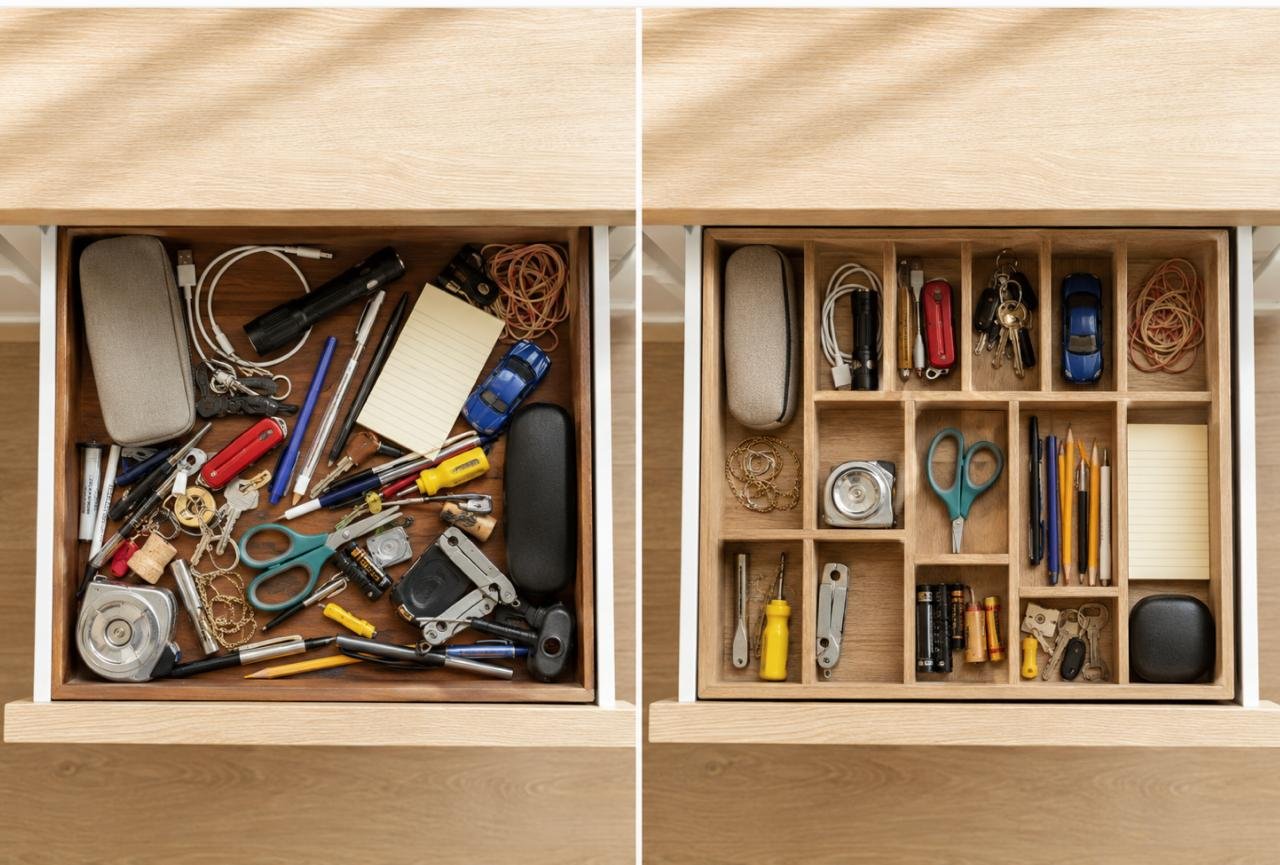
A simple guide to creating a useful catch-all space—without expecting every little thing in your home to have a perfect place.
Yes, having a junk drawer is completely normal.
Most homes need a convenient place for the small, useful things that do not belong anywhere else: batteries, tape, scissors, spare keys, charging cords, stamps, and the pen you reach for every day.
The problem is not the drawer itself. The problem begins when it becomes the default destination for everything we do not know what to do with.
Receipts go in. Rubber bands go in. Mystery keys, loose change, takeout menus, dried-out pens, and cords from long-forgotten devices all go in.
Eventually, the drawer stops being useful and becomes one more space we avoid.
A Catch-All Drawer Can Still Be Intentional
A well-organized junk drawer does not need to be picture-perfect. It simply needs to work.
You might even rename it. Instead of a junk drawer, think of it as a utility drawer—a small home for frequently used household essentials.
That shift matters. “Junk” invites us to toss things in without thinking. “Utility” asks whether an item is useful and belongs there.
How to Organize It
1. Empty the drawer
Take everything out and place it on a nearby counter. Seeing the entire contents makes it easier to understand what has accumulated and what you actually use.
2. Remove the obvious waste
Discard expired coupons, old receipts, broken rubber bands, empty packaging, and dried-out pens. Recycle batteries and electronics appropriately.
Start with the easy decisions. You do not need to deliberate over every item.
3. Return misplaced items
Not everything in the drawer belongs there. Tools may belong in the garage, birthday cards with stationery, and important receipts in a file.
If something already has a logical home, return it there.
4. Group what remains
Create a few simple categories, such as writing supplies, batteries, small tools, adhesives, and charging accessories.
Your categories do not need to make sense to anyone else. They only need to help the people in your home find and return what they use.
5. Add containers with a purpose
Measure the drawer before purchasing organizers. Choose shallow trays or dividers that fit both the drawer and its contents.
Clear acrylic trays feel light and make everything visible. Bamboo or white-oak dividers bring warmth to a natural kitchen. Interlocking bins are useful when your needs may change.
You can also use small boxes or shallow dishes you already own. Organization does not require buying an entirely new collection of containers.
Keep frequently used items near the front, and leave a little open space. A drawer packed to capacity will quickly become difficult to maintain.
The Five-Minute Reset
Once the drawer is organized, it should not require another dramatic transformation.
Every few months, take five minutes to remove trash, test the pens, return misplaced objects, and replenish only the supplies you regularly use.
This small reset keeps the drawer from becoming overwhelming again.
Keep the Junk Drawer
A functional home is not one in which every possession is hidden inside a perfectly labeled container. It is one in which the things you use are easy to find, easy to return, and do not create unnecessary friction.
So keep the junk drawer. Just make it a drawer that helps you.
Because organization is not about eliminating the odds and ends of everyday life. It is about creating enough structure that those ordinary things no longer overwhelm the space—or you.
